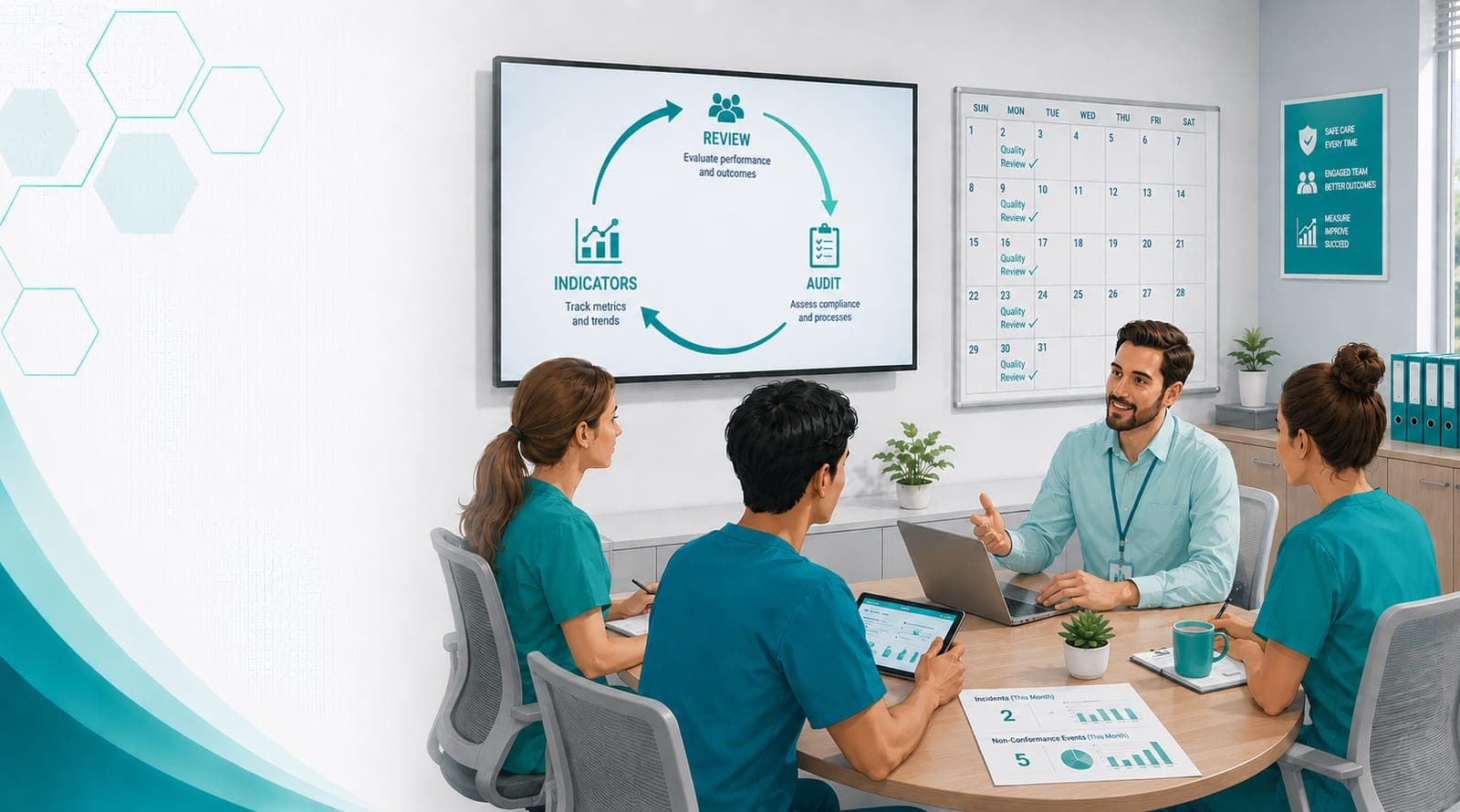
Here's a detail in the College of Physicians & Surgeons of Alberta (CPSA) model that quietly shapes everything: non-hospital surgical facilities are assessed on a four-year rotation, with no mandatory mid-cycle assessment, and facilities aren't required to submit ongoing self-assessment between cycles. It sounds like breathing room. It's actually the trap — because nothing external forces you to keep the Quality Management System running, and a QMS that isn't maintained quietly decays. This is the closer for the series: how to keep the system you built alive year-round.
Why the gap is the danger
A QMS is a loop, not a project: decide how work should be done, do it that way, check it's working, fix it when it isn't, and keep the evidence. The four-year cycle tempts facilities to treat that loop as a survey sprint: stand it up before the assessment, let it slide after, and rebuild it next time. The facilities that scramble at reaccreditation are almost always the ones that let the loop stop turning. The ones that stay calm never let it.
What keeps a QMS alive
The maintenance rhythm is built from the engine pieces this series already covered. The trick is putting them on a schedule instead of a deadline:
- A management-review rhythm. Leadership periodically looks at the indicators, audit results, complaints, and non-conformances together and decides what changes: the part of management responsibility that closes the loop at the top.
- Internal audits and quality indicators on a calendar. Measured continuously, not reconstructed before a survey — the heart of measuring what matters.
- The non-conformance and CAPA loop, always running, so problems become corrective action and improvement in real time, not findings at the next cycle.
- Documents and records kept current, reviewed at the defined intervals your document control policy sets, not whenever someone remembers.
- The feedback channel open: stakeholder feedback and complaints flowing in and being acted on between visits, not just collected.
Read together, these aren't separate chores. They're the loop, turning.
What "getting it right" looks like
- A calendar of recurring QMS activities (management reviews, audits, indicator checks, document reviews, drill schedules) owned by a named person, so readiness is a habit rather than a scramble.
- Evidence that accumulates year-round, so reaccreditation is a confirmation of how you already work, not a reconstruction of it.
- A culture where the QMS is the operating system of the business, not a binder you dust off every fourth year.
How Zosimos helps
Keeping a QMS alive is a cadence problem, and cadence is where software and a steady hand both help. We set up the maintenance rhythm — the review schedule, the audit calendar, the indicator dashboard — and build the tools to run it. The Accreditation Audit Tool, Compliance Tracker, and PolicyHUB we're building on the Zosimos Enterprise hub (launching soon) are designed to schedule the recurring work, surface what's overdue, and keep the evidence retrievable, so the next cycle is calm.
This completes the series: from what a Quality Management System really means through every section of the standard. See our CPSA NHSF accreditation support or get in touch when you're ready to build a quality system that stays ready.
The cheapest way to keep a quality system honest between cycles is to test it periodically. Our free accreditation readiness check is built for exactly that.