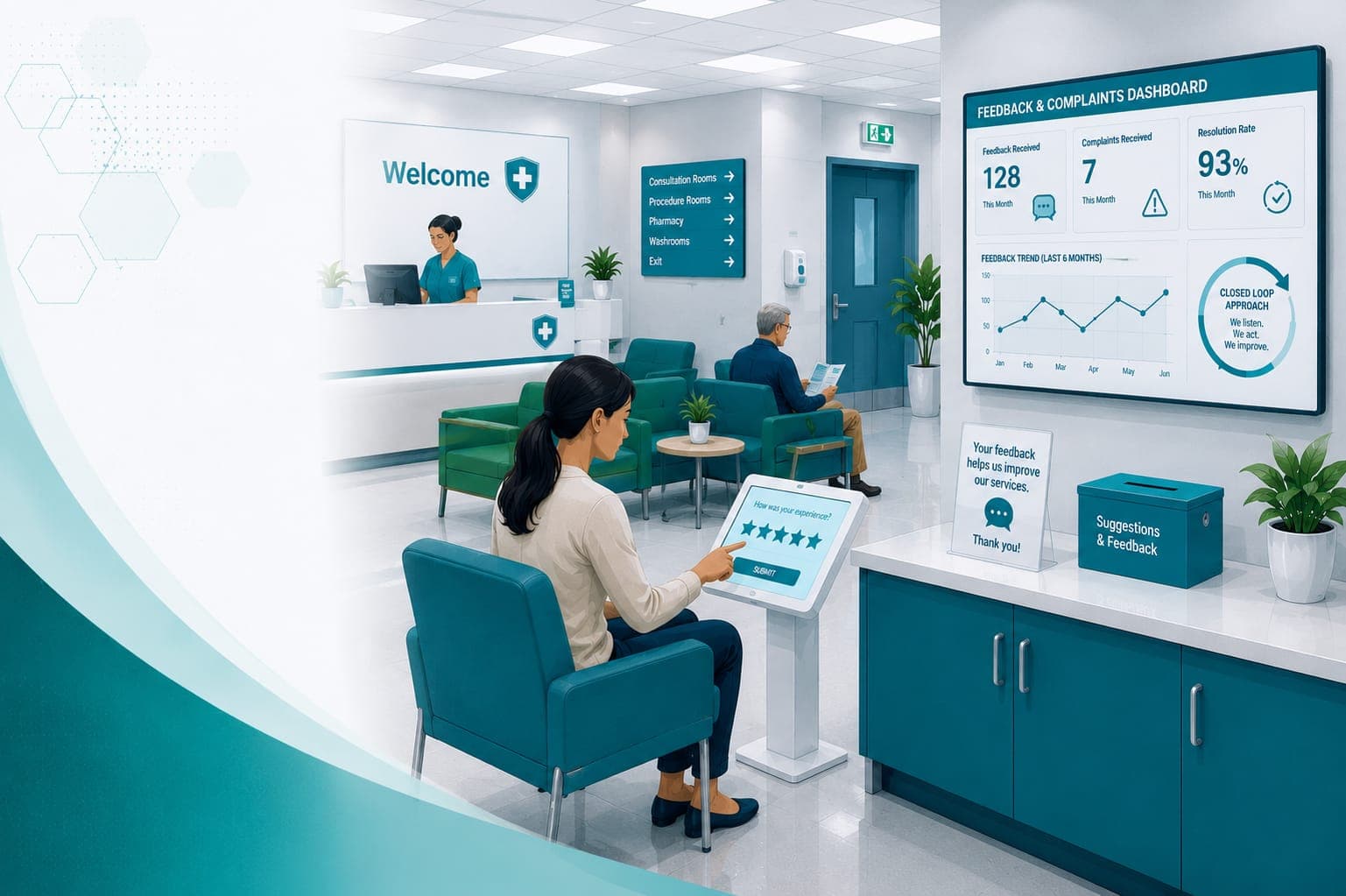
A Quality Management System improves by learning, and it can only learn from what it hears. So the College of Physicians & Surgeons of Alberta (CPSA) standard treats listening as a process in its own right: structured communication with the people who use your services, a feedback loop that actually closes, formal complaint resolution, and a confidential way for anyone to raise a safety concern.
It's the part of the QMS that's easiest to fake with a comment box on the counter — and the part assessors can see through quickly.
What CPSA expects
The standard runs across two connected areas — stakeholder consultation, and the resolution of complaints:
- Regular communication with the users of your service. Protocols that keep referrers informed: which procedures suit which cases and how often to request them, where each procedure's limits lie, how individual cases are handled, what the outcomes look like, how to use the facility well, and how to consult on specific clinical and logistic questions.
- Feedback solicited systematically. A real process (surveys, for example) for gathering feedback from stakeholders to improve the service. Stakeholders are both internal (your staff) and external (referring clinicians, patients).
- A loop that closes. For stakeholder suggestions, there's evidence they were evaluated, implemented where appropriate, and that feedback was given back to the people who raised them. Collecting input you never act on doesn't meet the standard.
- A confidential safety channel. A protected route for anyone to escalate a safety or quality risk straight to senior leadership, so a staff member can flag it without it costing them.
- Complaints investigated and resolved. Every complaint (and any other stakeholder feedback) is investigated and settled on a defined timeline, and the file shows the corrective action that followed. Not just that it was received, but that something changed.
Why it's more than a comment box
- Feedback collected but never closed. A drawer of survey forms is not a feedback system. The standard asks specifically for evaluation, action, and reply: the closing of the loop.
- No protected way to raise concerns. If the only route runs through the person a concern is about, staff stay quiet. The confidential channel to executive management exists to break that bind.
- Complaints that don't connect to improvement. A complaint resolved in isolation is a missed signal. The standard ties complaint resolution to corrective action, which is the same machinery as your non-conformance and CAPA process.
- "We'd know if there was a problem." Without structured solicitation, you only hear from the loudest — and miss the patterns that quality indicators and audits are meant to surface.
What "getting it right" looks like
- Patient and referrer feedback gathered on a schedule, with a defined step to review it and act, and a record of what changed as a result.
- A logged complaints process that captures the complaint, the investigation, the resolution, and the corrective action, so a pattern across complaints becomes visible.
- A genuinely confidential safety channel to leadership, communicated to staff so they know it exists and trust it.
- The loop made visible — feedback in, action out, reply back — so consultation is something the facility does, not something it files.
How Zosimos helps
We help facilities turn listening into a system: feedback and survey processes that include the closing step the standard requires, a complaints workflow that feeds corrective action instead of dead-ending, and a confidential route for staff to raise concerns. The Compliance Tracker and Accreditation Audit Tool we're building on the Zosimos Enterprise hub (launching soon alongside PolicyHUB) are designed to log feedback and complaints, link them to corrective action, and keep the evidence of follow-through retrievable.
See our compliance & accreditation support or get in touch if you collect feedback today but can't show what changed because of it. This completes the core of the QMS engine; for the whole picture, start with what a Quality Management System really means.
Feedback and complaint handling forms part of our free accreditation readiness check.