Before a single instrument is counted or a policy is filed, the College of Physicians & Surgeons of Alberta (CPSA) standard asks two questions about your facility: who is in charge, and is everyone qualified to be here? That's NHS.1.0 (Organization, Management & Personnel), the governance and people foundation the rest of the Quality Management System stands on. It pairs naturally with who owns the QMS: one is about running the quality system, this one is about running the organization.
What CPSA expects
The section runs from the legal entity down to each staff member's competency. In plain language:
- A real, insured entity. The facility (or its parent organization) is a legally identifiable entity, with documentary proof, and carries professional liability coverage for every staff member.
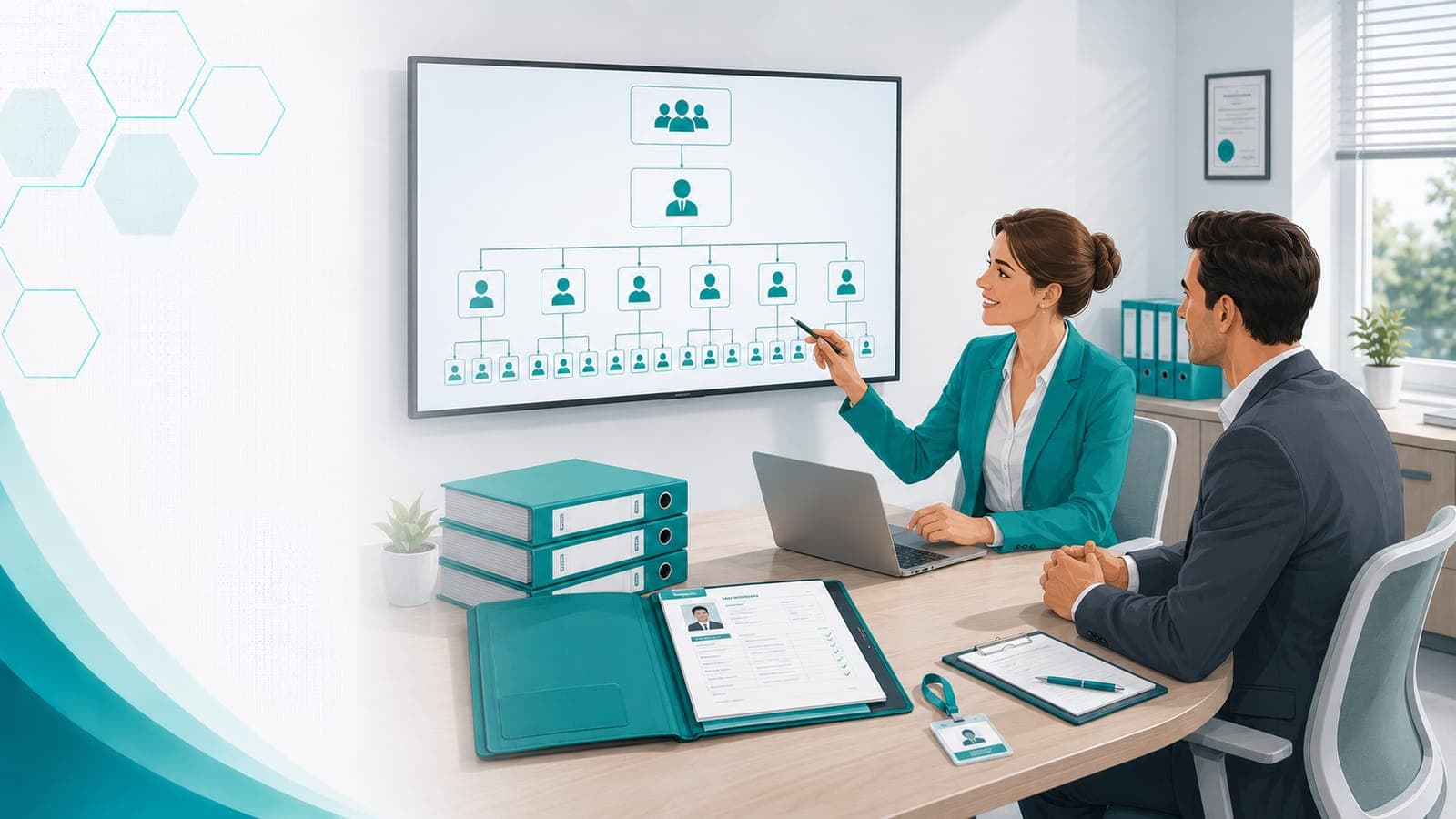
- A defined org structure: written, shared, and backed up. Responsibilities, authorities, and reporting relationships are defined, documented, and communicated (an org chart is the usual tool), with named deputies to cover key management and professional roles during absences.
- Comprehensive written policies that are actually followed. Policies and procedures cover all facility activities, build in the accreditation standards and applicable law, are overseen by management, and, critically, staff work to them as written.
- A physician Medical Director. A qualified physician, registered in good standing, carries ultimate accountability for the facility's operation. Where duties are handed off, there's formal written delegation to a named designate; where services fall outside the director's scope, a qualified consultant physician is engaged to direct them.
- Enough qualified, licensed people — verified. Staffing matches the volume, range, and complexity of procedures; all clinical staff are registered in good standing; recruitment verifies credentials, education, experience, and licensing; and role-appropriate certifications (CPR, BCLS/ACLS/PALS, IV) are kept current.
- Job descriptions and confidential personnel records. Every role has a job description; each person has a complete, confidential file (qualifications, licensure, competency assessments, continuing education, immunization, incident records, and performance appraisals) with controlled access and confidential disposal.
- Integrity safeguards. Conflict-of-interest and impartiality policies, plus patient-information confidentiality with evidence it's being complied with.
- People who keep getting better. Continuing education, performance evaluations at QMS-defined intervals, training and orientation, periodic competency assessment, and adverse-incident prevention training, with a working system for communicating with staff and records of what was discussed.
Why facilities struggle with it
- The org chart exists but lives in a drawer. "Defined" isn't enough — the standard wants it communicated, with deputies named. Most facilities can't say who covers the medical director when they're away.
- "Qualified" is assumed, not evidenced. Everyone is licensed — but there's no verification trail from the point of hire, and no record of the good-standing check.
- Delegation by habit, not in writing. Director duties get done by others informally; the standard wants the delegation named and documented.
- Competency is a one-time event. Staff are oriented once and never formally reassessed, so the file can't show ongoing competence.
What "getting it right" looks like
- A living org chart plus a short delegation register that says who holds (and who backs up) each key role.
- Credential verification built into hiring, and periodic re-checks of registration and required certifications, captured in the file.
- A complete personnel file per person, with competency assessed after training and at regular intervals, not just at onboarding.
- Continuing education and performance reviews on a schedule tied to the QMS, so development is a system, not a good intention.
How Zosimos helps
We help facilities stand up the governance and people framework the standard expects: a documented org structure and delegation model, the personnel policies and job descriptions underneath them, and a credential-and-competency system that proves your team is qualified — not just asserts it. The Compliance Tracker and PolicyHUB we're building on the Zosimos Enterprise hub (launching soon) are designed to hold credentials, certifications, continuing education, and competency assessments with the reminders that keep them current.
For non-surgical clinics: almost all of NHS.1 is general governance and HR: a defined structure, verified credentials, confidential personnel records, CE, and competency all apply directly; you simply drop the surgery-specific certifications and the consultant-physician requirement.
See our CPSA NHSF accreditation support or get in touch if you couldn't produce a complete, current personnel file for every staff member today. Next in this series: the care environment — physical facilities.
Credentials and personnel records are among the most commonly incomplete evidence at survey. Score your facility against the accreditation standards to find out where yours sit.