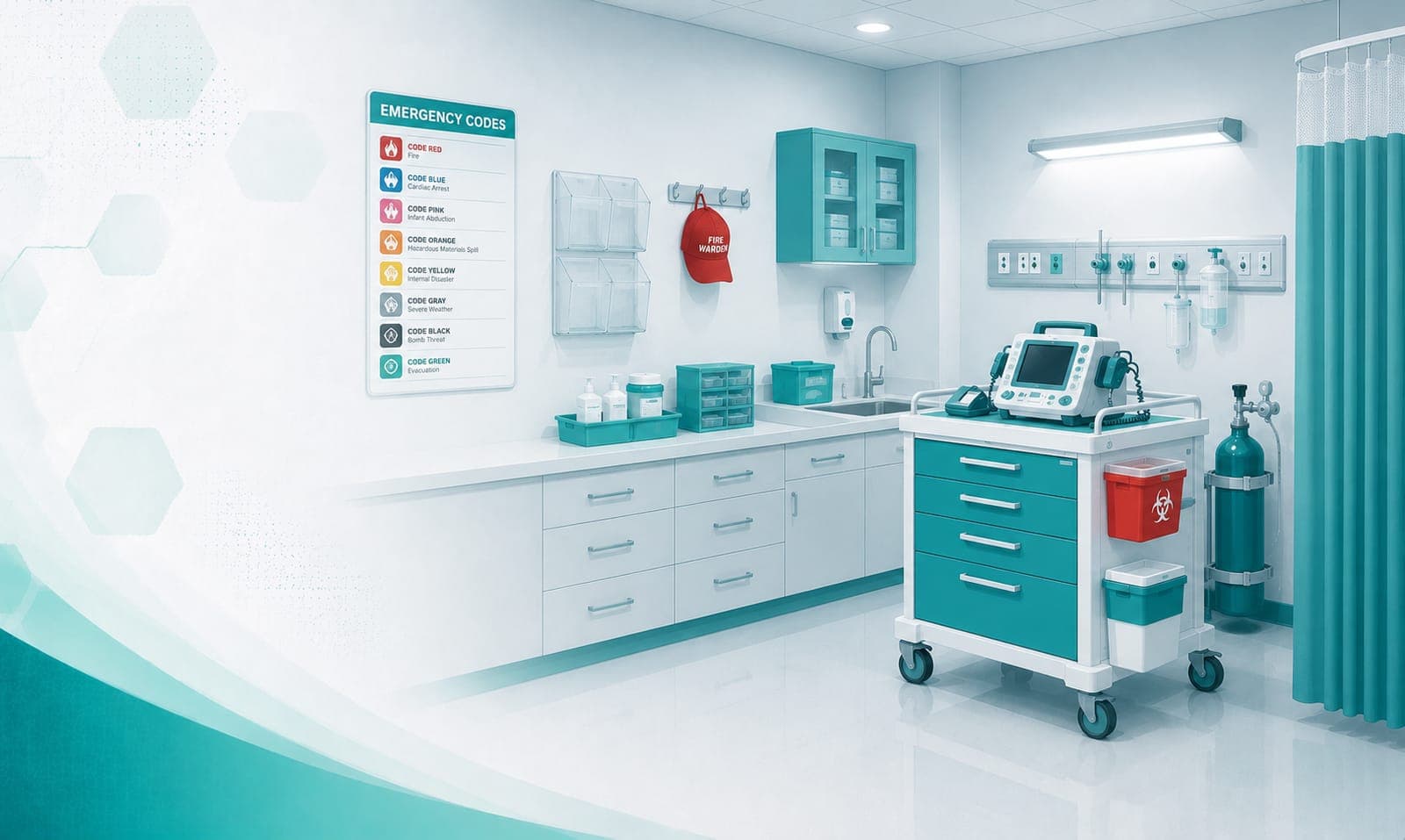
A non-hospital surgical facility doesn't have a code team down the hall. That's exactly why CPSA's Medical Emergency Preparedness (NHS.8) standard is so specific: when something goes wrong in a procedure room, the facility's own preparation is the safety net. Being ready on paper isn't the bar — being able to act is.
Protocols for the emergencies that actually happen
The standard expects written processes and immediately accessible algorithms for the range of perioperative emergencies, including:
- Cardiac arrest, cardiac chest pain, and respiratory emergencies
- Malignant hyperthermia, with Dantrolene stocked (a minimum supply is specified) when triggering agents are used
- Anaphylaxis, local anesthetic systemic toxicity (LAST), hypoglycemia, hypotension/hypovolemia, syncope, and neurological emergencies
- An incapacitated anesthesiologist or surgeon, equipment failure, and surgical fires
Crisis-management, BLS, ACLS, and (where relevant) PALS algorithms are current and located right where they'd be used (the OR and recovery area), not in a binder down the corridor.
Knowing when, and how, to transfer
Because the facility has limits, the standard wants a clear transfer policy: criteria for moving a deteriorating patient to a hospital, established lines of communication with a nearby hospital for urgent advice or resources, and written processes for emergency access to physicians, additional staff, equipment, blood products, imaging, and transport. (A resuscitated cardiac-arrest patient, for example, is transferred by EMS, accompanied appropriately, without delay.)
The crash cart: checked, stocked, documented
The emergency cart is where this standard gets tangible:
- Appropriate to the services and patient population (e.g. pediatric vs. adult) and to the level of sedation provided.
- Portable and immediately available in a common patient area.
- Checked before the first case every procedural day — fully stocked, in working order, medications and equipment in-date and organized, AED/defibrillator pads present and in-date, battery charged.
- Checks documented, with the duty rotated among staff.
Drills make it real
Preparedness has to be practiced, not assumed. The standard expects periodic mock emergency drills — at minimum every six months, emergency-readiness training during orientation and whenever medications, equipment, roles, or protocols change, and documented drill reports that capture attendance and any training needs or practice changes, with corrective action.
Where "ready on paper" breaks down
- Cart checks with gaps, or an expired medication discovered during a survey.
- Drills that lapse past the six-month mark, or happen but aren't documented.
- A transfer plan no one has rehearsed — and no record of the hospital relationship.
- Algorithms that aren't current, or aren't where the team needs them.
How Zosimos helps
Emergency preparedness is a documentation-and-cadence problem, and that's solvable. PolicyHUB (launching soon) keeps your emergency protocols and algorithms controlled, current, and accessible at the point of care; our Compliance Tracker (also launching soon) is built to drive the recurring work the standard lives on (daily cart checks, medication-expiry alerts, six-month drill scheduling, and training reminders) with the documentation trail attached. Our consulting team helps you build the protocols, transfer agreements, and drill program to the CPSA standard, and a mock review confirms you're genuinely ready.
See our CPSA NHSF accreditation support, or get in touch. For the bigger picture, see what a Quality Management System ties all of this together into.
Emergency preparedness is one of the eight domains in our accreditation self-check, and one of the easiest to let lapse between cycles.