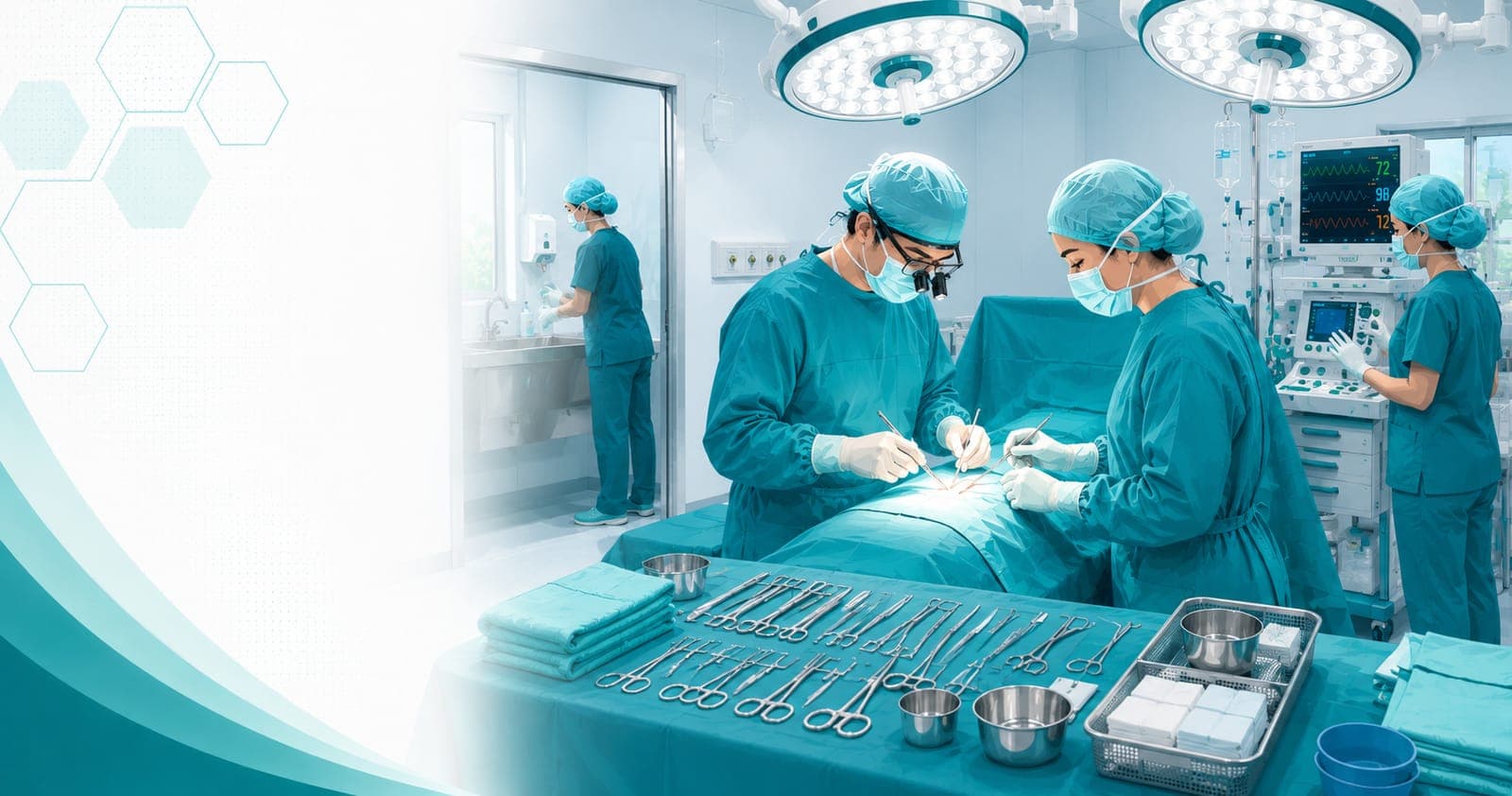
If the pre-service stage is about getting the right patient ready, the intraoperative stage is about doing the procedure safely, and it's where the College of Physicians & Surgeons of Alberta (CPSA) standard gets most physical. The service protocols of NHS.7 and the intraoperative-care requirements of NHS.9 cover how the room is zoned, how the sterile field is built and kept, how the patient is prepped and positioned, and how medications cross the field. It's a large slice of the Quality Management System; here's the shape of it.
What CPSA expects
- Documented, controlled operational protocols. Written protocols that accurately describe every procedure you perform, in a standardized format, validated against current best practice, accessible at the point of use (with a backup when the system is down), under change control with medical-director sign-off, and a system that records who performed each service.
- Restricted-access zoning and attire. Three access levels (unrestricted, semi-restricted, restricted) with a control point, clear separation, and a dress code: surgical attire, hair covering, masks within a metre of the sterile field, eyewear, clean dedicated footwear, and no eating or personal belongings in semi-restricted areas.
- A properly equipped operating room. An adjustable table, monitoring matched to the anesthesia level, oxygen and suction, patient warming, surgical lights, a smoke evacuator, uninterrupted power for critical equipment, and an emergency light source.
- Adequate, qualified perioperative staffing, matched to acuity, complexity, and risk, with scrub/circulating roles appropriately filled and a second professional immediately available.
- A monitored sterile field. Only qualified personnel establish and work within it; every item is checked for sterility before opening; breaks in technique are monitored, documented, and corrected; and the room gets defined between-case and terminal cleaning — documented.
- Preoperative antiseptic skin preparation done clean-to-dirty, allowed to dry before draping, with normothermia maintained and hair removed only if necessary, by clippers.
- Safe use of the high-risk extras — electrosurgery devices, patient positioning (to prevent positioning injury), and pneumatic tourniquets — each inspected, applied correctly, and documented on the intraoperative record.
- Diagnostics handled as a system. Vetted, accredited off-site testing arrangements; lab-test and specimen management with a written tracking log from the procedure room to pathology; controlled point-of-care testing with reagent and equipment control; and imaging run only by authorized operators.
- Intraoperative medications, safely. Aseptic preparation; labels, strength, and expiry verified by two people before transfer to the field; only one medication moved to the field at a time, then labelled immediately; and strict controlled-substances custody, logging, dual end-of-day counts, and locked storage.
(Blood products and allografts carry their own additional requirements — consent, traceability, and approved sources — where a facility uses them.)
Why facilities struggle with it
- Sterile-technique breaks go unrecorded. They happen; the standard wants them monitored, documented, and corrected, and that trail is usually missing.
- Cleaning isn't documented. Between-case and terminal cleaning are done but not evidenced.
- Medication labelling on the field is the classic error source, and the one-at-a-time, two-person-verified discipline is hard to hold under pressure.
- Protocols drift. They exist, but aren't change-controlled, version-current, or accessible at the point of use.
What "getting it right" looks like
- Version-current, accessible protocols under real change control, with medical-director approval captured.
- A sterile field with a documented break-and-correct trail and documented cleaning between and after cases.
- Two-person, one-at-a-time medication verification on the field, and a controlled-substances log that reconciles every day.
How Zosimos helps
The intraoperative standard is documentation-heavy by design, and that's where purpose-built tools help: PolicyHUB for the change-controlled protocols, and the Accreditation Audit Tool and Compliance Tracker (launching soon on the Zosimos Enterprise hub) for the cleaning logs, count and medication records, and controlled-substances reconciliation the standard expects. Our consulting team builds the procedures underneath them.
For non-surgical clinics: the protocol-governance, diagnostics and point-of-care testing, and general medication and controlled-substances requirements scale directly. The sterile-field, attire, electrosurgery, positioning, and tourniquet requirements apply only where you perform invasive or sterile procedures.
See our CPSA NHSF accreditation support or get in touch if your sterile-technique or medication records wouldn't stand up to a survey. Next in this series: anesthesia & sedation safety.
Intraoperative practice is one of the eight domains in our surgical facility readiness check.