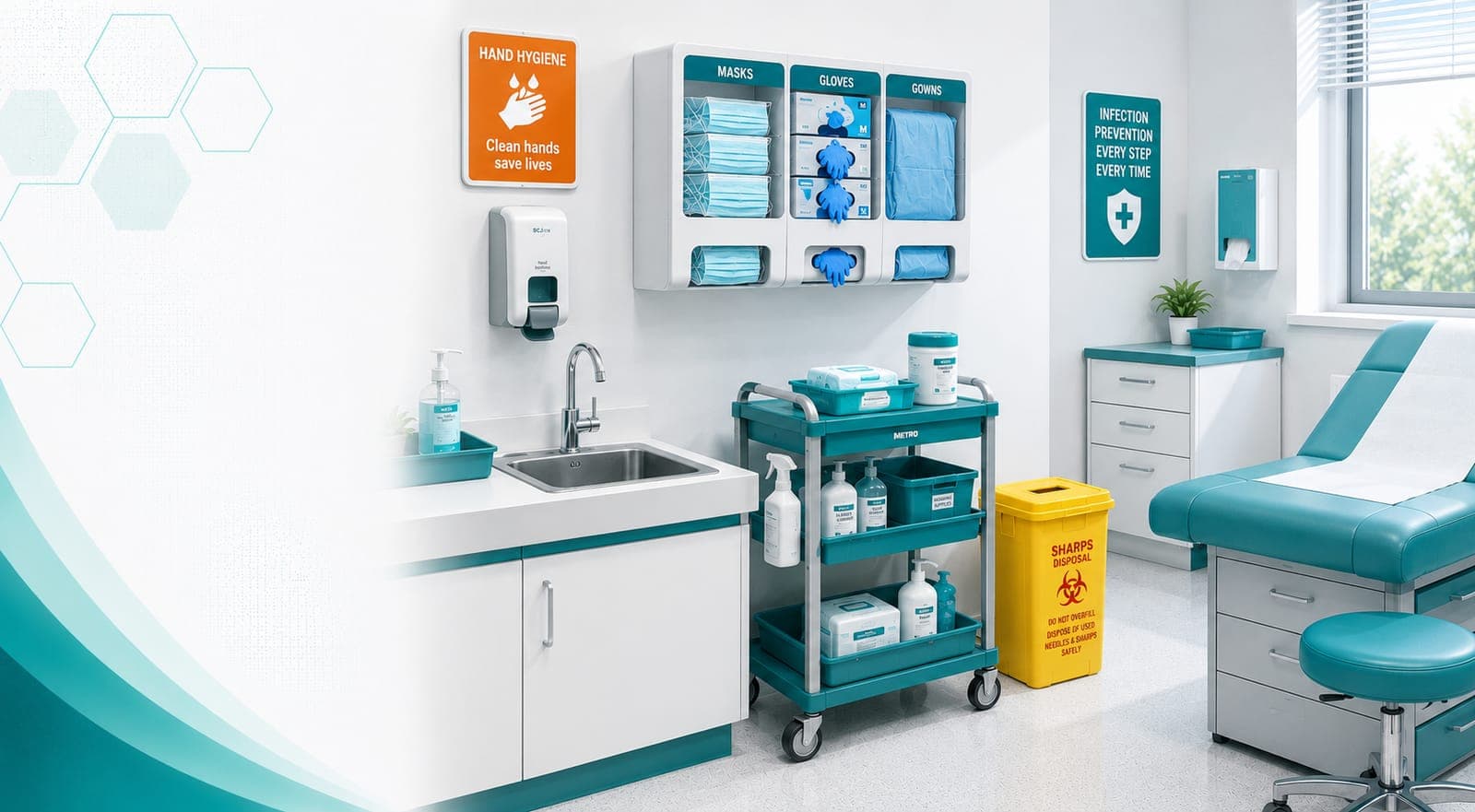
Infection prevention and control is the one part of the standard that touches every patient, every day — and it's the part that scales most directly to clinics, not just surgical facilities. In a non-hospital surgical facility, the College of Physicians & Surgeons of Alberta (CPSA) sets it out in IPC.1.0 of the IPC/MDR standard: a documented, evidence-based program that runs from the hand-hygiene sink to surgical-site-infection surveillance. It's a cornerstone of the Quality Management System, and a close cousin of the CPSA IPC inspection that community clinics already face.
What CPSA expects
- A documented, evidence-based IPC program: written policies grounded in current guidelines, a designated IPC lead with delegated authority and appropriate training (plus access to an infection-control consultant), and documented staff training at orientation, at least annually, and whenever something changes.
- Surgical-site-infection surveillance. Active surveillance of infectious complications, your SSI rate compared against an external benchmark, and investigation plus corrective action where the benchmark isn't met.
- An IPC-appropriate physical plant. Design that minimizes bioburden, cleanable work surfaces, separation of clean and dirty areas, and a pest control program.
- A PPE program. Backed by a risk assessment — appropriate gloves (with non-powdered/alternative options for latex sensitivity), and eye, face, and respiratory protection with fit-testing — and training on selection, donning, and doffing.
- Hand hygiene infrastructure and the 4 Moments. Dedicated hand-hygiene stations in the right locations, alcohol-based product at 60–90% alcohol, recommended technique, an artificial-nails/polish policy, and regular hand-hygiene audits with feedback and corrective action.
- Safe gels and topicals. Single-dose sterile gels for higher-risk procedures, and storage/handling that prevents contamination — gel containers are never washed, refilled, or warmed.
- Patient-care exposure control. Screening for communicable disease, transmission- based additional precautions, an outbreak policy, source control, and cleaning the examination table (and changing the barrier sheet) between patients.
- Sterile field and surgical aseptic technique: documented, best-practice-based policies, with all relevant staff trained.
- A full housekeeping and environmental-cleaning program. Defined cleaning and disinfection with DIN-registered disinfectants, cleanliness controls during construction, trained housekeeping staff, proper cleaning-supply storage, and IPC laundering of linens.
Why facilities struggle with it
- Hand hygiene isn't audited. The infrastructure is there; the audit-and-feedback loop the standard wants (measuring the 4 Moments and acting on it) usually isn't.
- SSI surveillance is passive. Infections are noticed, but not tracked against a benchmark with corrective action.
- Cleaning uses the wrong products. Household wipes appear in clinical areas instead of DIN-registered disinfectants used to their contact times.
- The IPC lead is unnamed or untrained. Responsibility is assumed across the team rather than delegated to a trained, named person.
What "getting it right" looks like
- A named, trained IPC lead and a written, evidence-based program with documented training.
- Hand-hygiene audits with feedback driving improvement, and the 4 Moments actually measured.
- SSI surveillance against a benchmark, feeding corrective action.
- An environmental-cleaning program with the right disinfectants, used correctly.
How Zosimos helps
IPC is a program-and-evidence discipline, and that's where we help: building the IPC program and policies, standing up hand-hygiene and SSI surveillance with the audit-and-feedback loop, and keeping the training and cleaning records straight. The Compliance Tracker and Accreditation Audit Tool we're building on the Zosimos Enterprise hub (launching soon) are designed to run the audits, track SSI rates against benchmarks, and keep the IPC evidence retrievable.
For non-surgical clinics: this is the most directly transferable section in the whole standard. The IPC program, hand hygiene, PPE, patient-care exposure control, and environmental cleaning apply almost unchanged. See our IPC inspection checklist for the clinic-focused version.
See our IPC & CPSA compliance support or get in touch if your hand-hygiene or SSI surveillance isn't measured today. This completes the procedure wave of the series — for the whole picture, start with what a Quality Management System really means.
For a clinic-focused version of this standard with a score attached, take the free IPC readiness check.